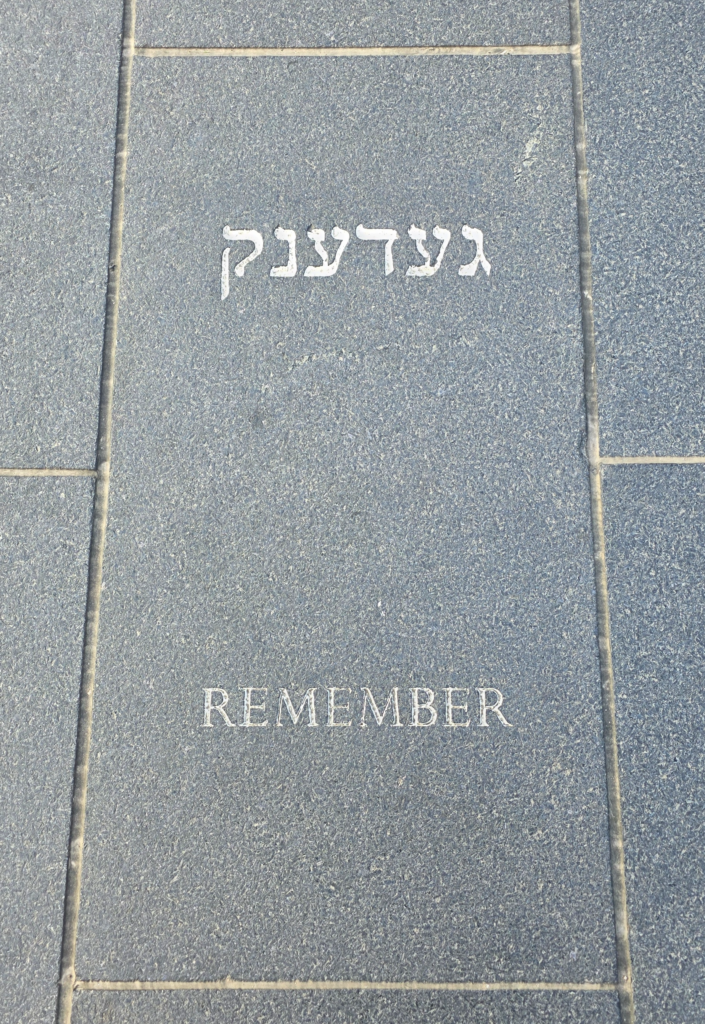
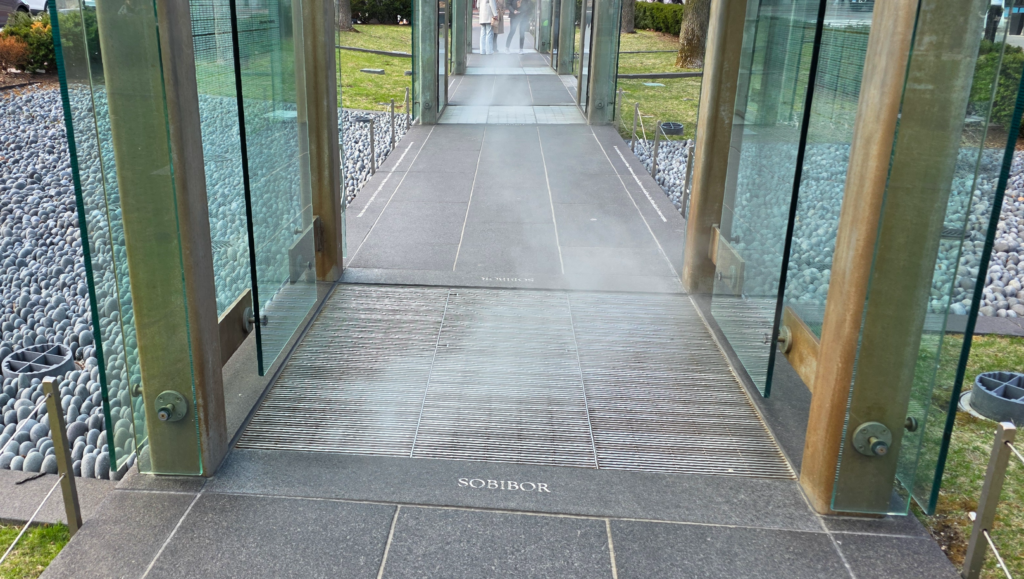
To remember their suffering is to recognize the danger and evil that are possible whenever one group persecutes another; … know that wherever prejudice, discrimination, or victimization are tolerated, evil like the Holocaust can happen again.
—New England Holocaust Memorial, Boston

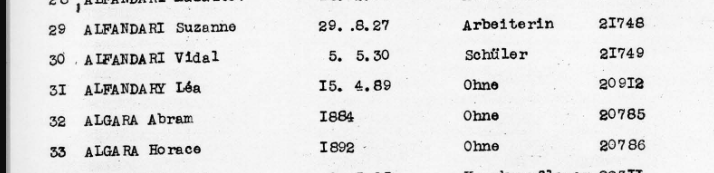
I have been here to this memorial before, but today I wept as I walked through, thinking especially of my great-grandparents, Raphaël Alfandary and Léa Caraco.
They escaped Berlin for France soon after Kristallnacht, and remained mainly in hiding, first in Marseilles and then in Nice. Their last place of hiding was in Les Moussieres, in the Jura mountains in France, about an hour across the border from Geneva and the safety of Switzerland which they never reached.
Raphaël was tortured and later shot and killed by the Nazis (on April 12, 1944) while in hiding in France. Léa was transported to Auschwitz on May 20, 1944, and died during the death march out of Auschwitz in 1945.
Raphaël is buried in a mass grave in the municipal cemetery in Les Moussières (Jura), which bears the following epitaph: « Aux Martyrs des Fournets 1944—Ici reposent les 6 Victimes Tuées aux Fournets le 12 avril 1944 par les barbares allemands et miliciens—Français Souvenez-vous » (“To the Martyrs of Les Fournets 1944—Here lie the 6 Victims Killed at Les Fournets on April 12, 1944 by German barbarians and militiamen – French, Remember.”)